Common Solar Generator Mistakes Nigerians Make (And How to Avoid Them)
Buying a solar generator in Nigeria should make life easier. Yet many people end up frustrated—power finishes too quickly, appliances won’t run, or the system stops performing after a short time. In most cases, the problem isn’t solar power itself; it’s avoidable mistakes made before and after buying.
This guide breaks down the most common solar generator mistakes Nigerians make, explains why they happen, and shows you exactly how to avoid them. If you’re planning to buy—or you already own a solar generator—this will save you money, stress, and disappointment.
Why Solar Generator Mistakes Are Common in Nigeria
Solar generators are still relatively new compared to petrol generators. Many buyers:
- Rely on guesswork instead of calculations
- Focus on price rather than suitability
- Receive poor advice from sellers
- Expect solar to behave like NEPA or petrol generators
Understanding what not to do is just as important as knowing what to buy.
Mistake #1: Buying Based on Price Instead of Power Needs
This is the most common mistake.
Many buyers ask:
“What is the cheapest solar generator available?”
Instead, the right question should be:
“What size solar generator can power my appliances reliably?”
Why this causes problems
- Cheap units usually have small batteries
- Power finishes after 1–2 hours
- You can’t run fans, TV, or fridge together
How to avoid it
- List your appliances (TV, fans, router, lights)
- Calculate total wattage and runtime
- Choose a generator that meets your needs, not just your budget
Mistake #2: Ignoring Battery Capacity (Wh)
Some Nigerians focus only on inverter power (watts) and forget battery capacity.
Why this matters
- Watts (W) tell you what you can power
- Watt-hours (Wh) tell you how long you can power it
A generator with a strong inverter but a small battery will:
- Run appliances
- But shut down quickly
How to avoid it
Always check both:
- Inverter rating (W)
- Battery capacity (Wh)
For most Nigerian homes, battery capacity matters more than people realize.
Mistake #3: Underestimating Night-Time Usage
Many buyers calculate daytime use but forget that:
- Fans run all night
- Lights stay on longer
- Phones keep charging
Real-life example
A system that lasts 4 hours in the afternoon may die by midnight when:
- Fans are on continuously
- TV runs longer
- No solar charging is happening
How to avoid it
Plan for worst-case usage, especially overnight. Add a buffer instead of sizing “just enough.”
Mistake #4: Assuming All Solar Generators Can Run a Fridge
This is a very common misunderstanding.
The truth
- Fridges have high startup (surge) power
- Small generators may not handle the surge
- Even if they do, the battery may drain quickly
How to avoid it
If you want to run a fridge:
- Check inverter surge rating
- Choose a generator with enough battery capacity
- Manage fridge usage (don’t open frequently at night)
Not all solar generators are fridge-friendly.
Mistake #5: Forgetting About Solar Charging Speed
Some generators can store power but recharge very slowly.
Why this becomes a problem
- Battery drains overnight
- Next day’s sunlight is not enough to refill it
- You’re stuck using NEPA or doing without power
How to avoid it
Check:
- Maximum solar input (W)
- MPPT controller support
- Panel compatibility
In a sunny country like Nigeria, fast solar charging is a big advantage—don’t ignore it.
Mistake #6: Choosing Too Small “To Manage”
Many buyers intentionally choose a smaller unit hoping to “manage” usage.
Why this backfires
- You keep switching appliances on and off
- Battery drains faster due to stress
- You end up upgrading sooner than planned
How to avoid it
Buy with future needs in mind:
- Additional fan
- New TV
- Small fridge later
A slightly larger system usually costs less than upgrading twice.
Mistake #7: Ignoring Warranty and After-Sales Support
In Nigeria, this mistake can be costly.
Common issues
- No local service center
- No replacement parts
- Seller disappears after sale
How to avoid it
Before buying:
- Ask about warranty length
- Confirm local support
- Buy from a reputable seller
A solar generator is an investment—support matters.
Mistake #8: Using the Generator Incorrectly
Even good systems fail when used wrongly.
Common misuse
- Draining battery to 0% regularly
- Overloading with too many appliances
- Leaving it unused for months without charging
How to avoid it
- Avoid deep discharge whenever possible
- Turn off unused appliances
- Charge regularly, even when not in use
Proper use can double battery lifespan.
Mistake #9: Expecting Solar to Replace NEPA Completely
Solar generators are powerful—but they are not magic.
The reality
- Portable solar generators are backup solutions
- They are not designed for heavy loads like ACs or cookers
- Expecting full replacement leads to disappointment
How to avoid it
- Lighting
- Fans
- TV and electronics
- Internet and work devices
For heavy loads, consider a full solar inverter system.
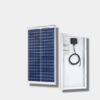
Mistake #10: Not Matching Solar Panels to the Generator
Buying random solar panels without checking compatibility is common.
Why this is a problem
- Slow charging
- Incompatible voltage
- Risk of damage
How to avoid it
Always confirm:
- Supported panel wattage
- Voltage range
- Recommended panel configuration
Panels should complement the generator—not fight it.
Quick Checklist: How to Avoid Solar Generator Regret
Before buying, confirm:
- ✔ You calculated your power needs
- ✔ Battery capacity (Wh) suits your runtime
- ✔ Inverter power (W) supports your appliances
- ✔ Solar charging speed is adequate
- ✔ Warranty and support are available
- ✔ You planned for future expansion
If you can tick these boxes, you’re on the right path.
Final Thoughts
Most solar generator problems in Nigerian homes don’t come from bad products—they come from bad decisions made without proper information.
By avoiding these common mistakes:
- You save money
- You enjoy longer runtime
- You reduce stress during outages
- You get real value from your investment
Solar power works in Nigeria when it’s chosen wisely.