Solar Generator Prices in Nigeria: What Affects the Cost in 2026?
If you’ve started shopping for a solar generator in Nigeria, you’ve probably noticed one thing immediately: prices vary a lot. Two products that look similar can have very different price tags, and that can be confusing—especially if you’re trying to avoid wasting money.
This guide explains exactly what affects solar generator prices in Nigeria in 2026, using real-world factors that matter locally. By the end, you’ll understand what you’re paying for, how to compare options properly, and how to choose the best value, not just the cheapest option.
Why Solar Generator Prices Vary So Much in Nigeria
A solar generator is not a single component. It’s a system made up of:
- A battery
- An inverter
- A charge controller
- Output ports
- Safety electronics
- Sometimes solar panels
Each of these parts affects price. On top of that, Nigeria-specific factors like exchange rates, import duties, and after-sales support also play a role.
1. Battery Capacity (Wh): The Biggest Price Driver
The battery size, measured in watt-hours (Wh), is the single most important factor in pricing.
What battery capacity means
- 500 Wh = small backup power
- 1,000–1,500 Wh = medium home backup
- 2,000–3,000 Wh+ = full night coverage for many homes
Why it affects price
- Bigger batteries store more energy
- Lithium batteries are expensive to manufacture
- Higher capacity = more cells = higher cost
In Nigeria (2026):
- Small solar generators are more affordable
- Large-capacity units cost more but last longer per charge
💡 Tip: Always look at usable capacity, not just advertised capacity. Some cheaper units advertise large numbers but limit how much you can actually use.
2. Inverter Power (W): What Your Generator Can Run
The inverter determines:
- How many appliances you can power at once
- Whether you can run fridges, freezers, or TVs safely
Why inverter size affects cost
- A 500–800 W inverter is cheaper
- A 1,500–2,000 W inverter costs more
- High-quality inverters handle surge power better
If two generators have the same battery size but different inverter ratings, the one with the stronger inverter will cost more.
This matters in Nigerian homes where appliances like fridges and fans have startup surges.
3. Battery Type: Lithium vs Alternatives
Most modern solar generators use lithium batteries, but not all lithium batteries are the same.
Common battery types
- Lithium-ion (Li-ion)
- Lithium iron phosphate (LiFePO₄)
Why this affects price
- LiFePO₄ batteries:
- Last longer
- Are safer
- Support more charge cycles
- They also cost more upfront
Cheaper generators may use older battery technology that degrades faster, which increases long-term cost.
4. Solar Charging Capability (MPPT & Input Power)
Not all solar generators charge solar power at the same speed.
What to check
- Maximum solar input (W)
- MPPT controller quality
- Voltage range compatibility
Why it affects price
A generator that supports 600–1,000 W of solar input will:
- Recharge faster
- Cost more than one limited to 150–300 W
In Nigeria’s sunny climate, fast solar charging is a major advantage—and manufacturers price for it.
5. Included Accessories: Panels, Cables, and Extras
Some prices look high because more is included.
Items that raise cost
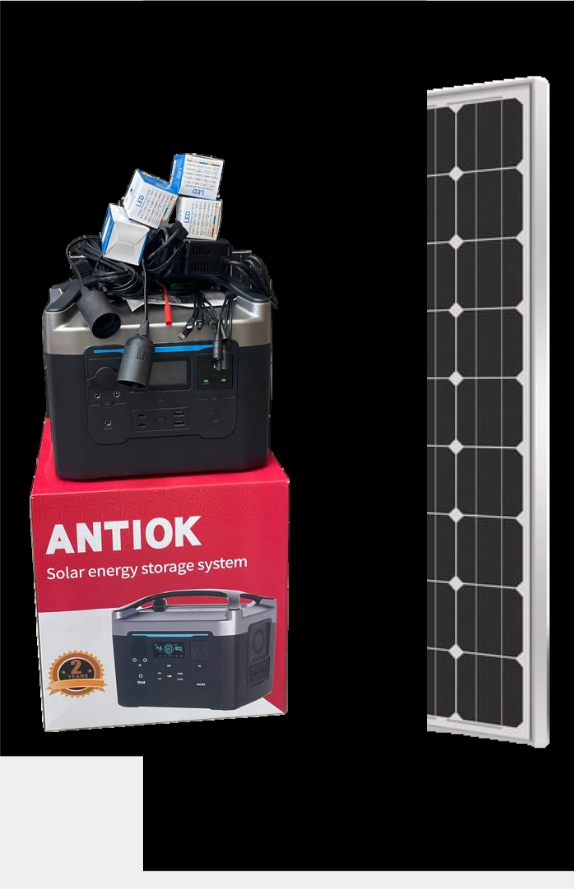
- Solar panels bundled with the generator
- High-quality cables and connectors
- Carry cases or trolleys
- Expansion battery ports
A generator sold without panels will look cheaper, but once you add panels later, total cost may be higher.
6. Brand Reputation and Build Quality
Brand matters more than many people realize.
Why trusted brands cost more
- Better internal components
- More accurate power ratings
- Safer battery management systems (BMS)
- Lower failure rates
In Nigeria, unreliable power equipment is a real problem. Paying slightly more for a proven brand often saves money in repairs and replacements.
7. Warranty and After-Sales Support (Very Important in Nigeria)
This is one area many buyers overlook.
What affects price
- Length of warranty
- Availability of service centers
- Access to replacement parts
A cheaper generator with no local support can become useless if it develops a fault. Sellers who offer real warranty and support price that into the product.
8. Importation Costs, Exchange Rate & Nigeria Factors
Solar generators are mostly imported, so prices are influenced by:
- Dollar exchange rate
- Shipping and customs duties
- Port and logistics costs
- Local distribution margins
In 2026, exchange-rate fluctuations continue to affect pricing, which is why prices can change even without changes in product features.
9. Typical Solar Generator Price Ranges in Nigeria (2026)
Prices vary by brand and configuration, but these ranges help with planning.
Small Solar Generators (150–600 Wh)
- Phone charging
- Laptops
- Router
- Lights
- 32 Inches TV
Price range: Lower entry level
150W solar generator costs N135,000
300w solar generator costs N180,000
500W solar generator cost N399,000
All comes with solar panels
Medium Solar Generators (800–1,800 Wh)
- TV and decoder
- Fans
- Lights
- Router
- Short fridge use
Price range: Mid-level
1000W solar generator costs N499,000
1800W solar generator costs 1,110,000
Large Solar Generators (2,000–3,000 Wh+)
- Full evening/night use
- Multiple fans and lights
- TV and electronics
- Fridge (managed use)
Price range: Higher, but better long-term value
2000W solar generator costs N1,300,000
10. Cheap vs Quality Solar Generators: What’s the Real Difference?
Cheaper units often:
- Have lower usable capacity
- Use weaker inverters
- Lack proper surge protection
- Offer little or no warranty
Quality units usually:
- Deliver close to advertised specs
- Last longer
- Recharge faster
- Have better safety systems
For Nigerian homes that rely on backup power daily, quality matters more than initial price.
11. How to Choose the Best Value for Your Budget
Instead of asking, “What’s the cheapest solar generator?”, ask:
- What appliances do I want to run?
- For how many hours?
- Do I plan to add more appliances later?
- Is after-sales support available?
- Can it recharge fast with solar?
Answering these questions helps you choose value, not just price.
12. A Simple Buying Example
If your home needs:
TV
- Fans
- Lights
- Router
- Charging devices
A 2,000–3,000 Wh solar generator may cost more upfront, but it:
- Covers your needs comfortably
- Reduces battery stress
- Avoids early upgrades
Over time, this often costs less than buying a smaller unit and replacing it later.
Common Pricing Mistakes Nigerians Make
- Comparing prices without comparing capacity
- Ignoring inverter wattage
- Forgetting to budget for solar panels
- Choosing based on price alone
- Overlooking warranty and support
Avoiding these mistakes saves money and frustration.
Final Thoughts
So, what affects solar generator prices in Nigeria in 2026?
It comes down to:
- Battery capacity and type
- Inverter power
- Solar charging capability
- Build quality
- Warranty and support
- Import and exchange-rate factors
Solar generators are an investment, not just a purchase. Understanding pricing helps you choose a system that delivers reliable power, long-term savings, and peace of mind—not regrets.